Rivian buys 15-person UK team to build 3D streets for self-driving tests
The acquisition targets the processing of over 400,000 daily fleet video clips into interactive simulation environments, supporting a 2028 robotaxi goal.
By Rafael Esposito ·
Rivian has acquired Third Dimension, a 15-person software company based in the United Kingdom, to strengthen its autonomous vehicle testing infrastructure. The purchase price was not disclosed. The deal brings a specialized team into Rivian’s autonomy and AI division, which is led by James Philbin.
Third Dimension was founded in 2024 by Tolga Kart and Piotr Sokólski. Kart previously worked on Tesla’s Autopilot simulation and led engineering at Parallel Domain. Sokólski spent four years at Wayve developing neural simulators. The startup described itself as a generative AI tool that creates 3D environments compatible with game engines. It raised a $7 million seed round led by Felicis in October 2024.
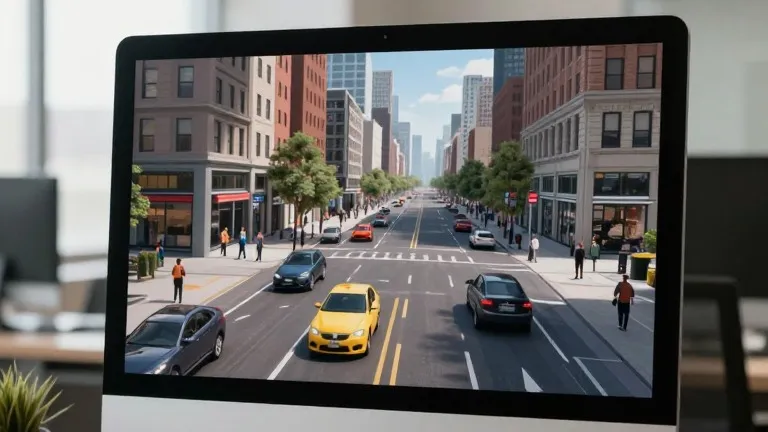
The core function of the new team is to convert real-world driving data into digital test beds. Rivian’s fleet, including R1S, R1T, R2, and commercial vans, sends back more than 400,000 driving sequences daily from owners who opt into data sharing. Philbin noted that most of this footage is routine. However, the specific edge cases that stress-test autonomous systems, such as a mattress in the fast lane or a child running between parked cars, occur rarely.
By rebuilding these rare events in 3D, engineers can alter variables and test system reactions without waiting for the physical event to recur on a real street. Philbin told TechCrunch that simulation is central to training and validating their systems. He added that Third Dimension has built technology that turns real-world data into detailed 3D environments.
The acquisition expands Rivian’s physical footprint in London, as most of the Third Dimension staff are UK-based. This move aligns with a strategy to accelerate development ahead of specific commercial deadlines. In March, Uber agreed to invest up to $1.25 billion in Rivian to deploy R2 robotaxis. Only $300 million of that amount is paid upfront. The remaining funds are tied to autonomy milestones, including the deployment of 10,000 driverless R2 vehicles in San Francisco and Miami starting in 2028.
Rivian’s internal timelines have already shifted to reflect the complexity of the task. A point-to-point driving feature for invited Autonomy+ owners is scheduled for release later this year, with testers required to sign nondisclosure agreements. The company originally promised "eyes-off" driving for 2026 in January 2025 but has now targeted 2027 for that capability. Level 4 autonomy is planned for 2028 on Gen 3 hardware.
Competitors are pursuing similar simulation strategies. Waymo unveiled its World Model in February, built on Google DeepMind’s Genie 3, to generate scenarios its vehicles have not encountered. Tesla has also demonstrated a neural world simulator for its Full Self-Driving software. The use of generative AI for test data is becoming a standard component of the autonomy stack.
The acquisition adds a targeted technical asset to Rivian’s roster without a large cash outlay. The team’s experience at Tesla and Wayve provides direct knowledge of neural simulation workflows. This approach allows Rivian to scale its testing environment in parallel with its hardware rollout, addressing the gap between real-world data collection and the need for controlled, repeatable testing conditions.
Source: Electrek
More Business · Tech news · Rip-Off Report · Report a business · Got a Story?