20 Million Barrels: The Modest Reality Behind Russia's Arctic Push
New data shows that while shipping volumes have risen, the Northern Sea Route remains a difficult and limited option for global trade.
By Rafael Esposito ·
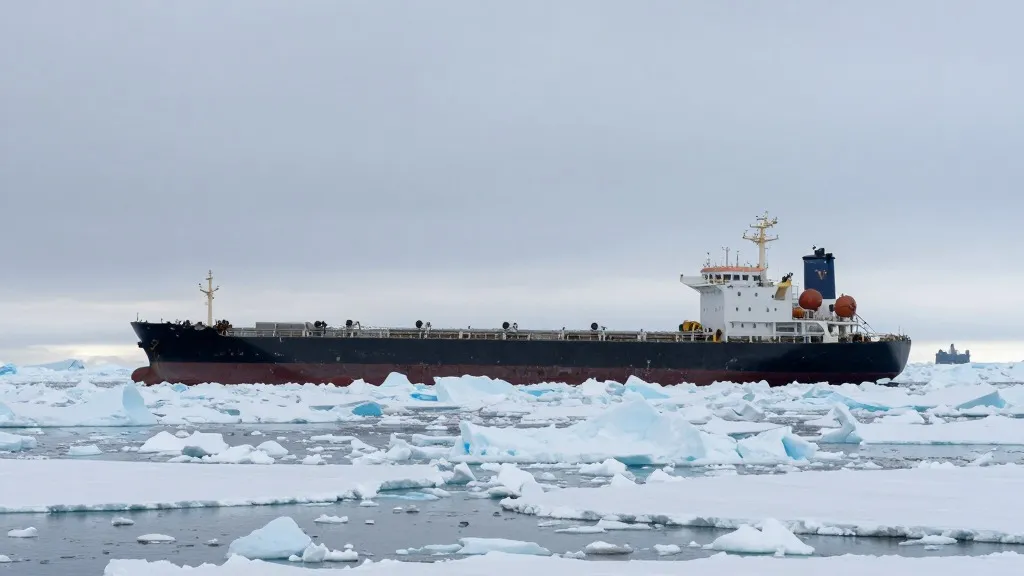
A single frozen strait has exposed the fragile state of a major Arctic shipping corridor.
In early July, several Russian tankers became trapped in the ice of the Vilkitsky Strait, a narrow passage only 55 kilometers wide. The vessels were stuck far above the Arctic Circle while waiting for nuclear icebreakers that were days away. Only one tanker managed to pass through immediately, while the others waited up to two weeks and eventually rerouted. This incident highlights the unpredictable nature of the waters, even as the Kremlin promotes the route as a secure alternative to paths closer to Europe and Ukraine.
The Northern Sea Route is central to Moscow's strategy for moving crude oil and natural gas to China. President Vladimir Putin recently stated that 37 million tons of cargo traveled along the route in 2025 and predicted this volume would nearly double by 2030. He described the path as a reliable link to major markets, a goal that has been a priority since 2019 when officials targeted 80 million tons by 2024.
Independent data suggests the growth is steady but modest. By mid-October, total shipments reached approximately 20 million barrels, a 50 percent increase from the previous year. However, this volume represents only about 1 percent of Russia's total seaborne oil exports. Tomas Alexa of the maritime security firm Ambrey noted that this surge starts from a low baseline. He added that Western sanctions complicate the maintenance of Arctic vessels, forcing repairs through third parties and limiting access to specialized services from Norway, Denmark, and the Netherlands.
Other nations are also testing the waters. South Korea reported on October 22 that its first container ship had completed the journey, praising the shortcut despite difficult ice conditions. China also launched its first scheduled container service to Europe this year. Catherine Sendak of the Center for European Policy Analysis pointed out that Russia views the Arctic as an internal waterway, leaving unclear how Moscow will handle tolls and access for foreign ships.
Security experts view the region as an increasingly active zone for power competition. EU foreign affairs chief Kaja Kallas described the area as a front line of global rivalry in October. NATO began an Arctic Sentry mission in February, and the United States announced plans to expand its military footprint in Greenland last month.
Environmental concerns remain a significant factor. Ksenia Vakhrusheva of the environmental group Bellona warned that melting ice can pack tightly and block ships, proving that less ice does not always mean easier passage. She also noted that oil spills in cold conditions degrade slowly and can spread over ice, with no independent monitoring to report on incidents in such remote areas.
Source: RFE/RL
More Business · World news · Rip-Off Report · Report a business · Got a Story?