Oil at US$113 adds $36 to Australian fuel costs as growth forecasts fall
Treasury officials are cutting economic projections ahead of the December budget update, citing Middle East conflict and slowing productivity.
By Jisoo Serrano ·
Australian Treasurer Jim Chalmers acknowledged on Friday that Treasury officials are lowering economic forecasts ahead of the December mid-year budget update. The revision reflects expectations for slower growth and higher unemployment, marking a shift from his comments last week that the economy would improve slightly within a year.
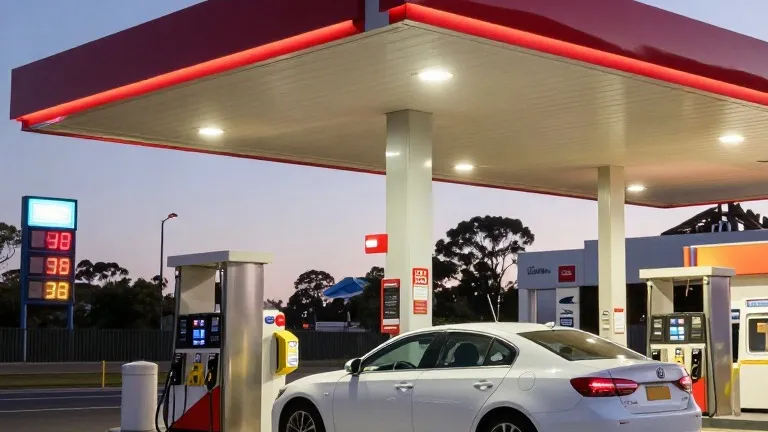
The primary driver of this adjustment is the widening conflict in the Middle East. Overnight, the global benchmark oil price rose to US$113 per barrel, approaching its April peak of nearly US$120. For Australian motorists, this increase translates to a 60-cent rise per litre compared to pre-attack levels. Filling a standard 60-litre tank now costs an additional $36, while families that refuel weekly face a monthly increase of $144 relative to February costs.
Further risks loom as the New York Times reported that the United States and Israel have drafted plans to resume attacks on Iran after American midterm elections. Westpac analysts outlined a scenario where oil prices could reach US$150, a projection that aligns with warnings issued by the International Monetary Fund earlier this month. Such an outcome would intensify pressure on inflation and interest rates, particularly with a fifth rate rise possible on 3 November.
Global economic conditions have also deteriorated due to concerns over corporate debt. Heavy spending on artificial intelligence infrastructure had previously masked broader weakness, but investors are now reacting to rising debt levels among technology firms. This anxiety triggered a steep sell-off on Wall Street overnight. Community opposition to datacentre construction may further slow the build-out, adding to short-term economic stress.
Reserve Bank Governor Andrew Hauser described the combination of high inflation, low growth, and rising unemployment as a central banker's nightmare. Chalmers, who told Politico that current pressures keep him awake at night, noted that some factors are outside Canberra's control. He cited decisions in Washington, Tehran, and Eastern Europe regarding two ongoing wars as key drivers of global inflation and growth constraints.
Chalmers faces limited options to address voter discontent. The government could implement a temporary fuel excise cut to lower petrol prices, but the resulting fiscal cost would complicate the Reserve Bank's efforts to rein in inflation. Alternatively, Labor could announce large spending cuts in the December budget. That move would assist the central bank but risk pushing unemployment higher in an already weak economy. Hauser characterized the current situation as a world of hard choices, where addressing one problem often exacerbates another.
Source: The Guardian
More Business · World news · Rip-Off Report · Report a business · Got a Story?