Tesla Withdraws Cybertruck: Australia and New Zealand Orders Cancelled
The electric automaker has voided reservations in the two markets after nearly seven years of waiting, citing the high cost of adapting the vehicle for right-hand drive configurations.
By Rafael Esposito ·
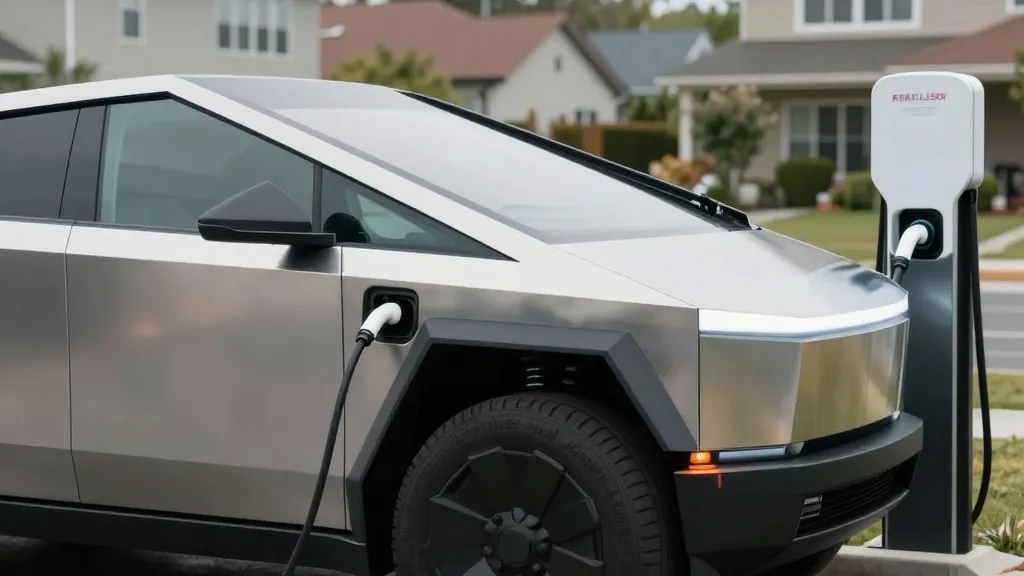
Tesla has officially halted its plans to sell the Cybertruck in Australia and New Zealand, ending a long period of uncertainty for customers in the region.
Reservation holders in both countries received emails on Thursday confirming that their orders are no longer valid. The notifications stated that the company had discontinued its production plans for these specific markets after careful consideration. Customers were informed that their deposits would be fully refunded within 30 days.
The decision marks the end of a wait that began in November 2019. At that time, Australian consumers began paying a 150 Australian dollar deposit to secure a spot in line for the electric pickup. For nearly seven years, potential buyers waited for a vehicle that the manufacturer now says it will not build for their region.
Tesla is attempting to retain these customers by offering a free one-year subscription to its Full Self-Driving software. This incentive is available to reservation holders who choose to order a new Model 3 or Model Y instead. These models are currently produced in right-hand drive, making them immediately suitable for local roads.
The primary obstacle to launching the Cybertruck in Australia and New Zealand has been the vehicle's left-hand drive configuration. Both markets require right-hand drive vehicles, and Australia additionally demands certification under its own specific design rules. Adapting the truck to meet these requirements would have been a significant financial undertaking.
The timing of the announcement came just one day after Tesla released its third-quarter 2026 earnings report. Recent data suggests that global demand for the Cybertruck is not strong enough to justify the investment. In the third quarter, the company delivered 8,295 units categorized as Other Models. This category now consists almost entirely of Cybertrucks, as production of the Model S and Model X has ceased.
Industry estimates place Cybertruck sales for that quarter between 7,000 and 8,000 units. This pace translates to approximately 30,000 units annually, which is a fraction of the production capacity of 250,000 units per year that Tesla built for the vehicle. Financial analysts suggest that at this current rate, the cost of re-engineering the truck for two markets with a combined population of roughly 33 million people is difficult to justify.
This is not the first time the company has adjusted its strategy in the region. Tesla quietly closed the Australian reservation page in May 2022, replacing it with a button to receive updates. At that time, the company did not issue refunds, leaving many customers waiting for several more years. In 2024, a Cybertruck was shipped to Australia for a display tour, and CEO Elon Musk told shareholders that certification for other markets might happen the following year.
The truck has launched successfully in several left-hand drive markets, including South Korea, the United Arab Emirates, Saudi Arabia, Qatar, Jordan, and Israel. However, it remains blocked in the European Union largely due to pedestrian safety regulations. The cancellation in Australia and New Zealand confirms that the Cybertruck is becoming a niche product primarily targeted at North America and other left-hand drive regions.
While some reservation holders may have already canceled their pre-orders, the official decision provides clarity for the remaining customers. The Cybertruck that was eventually released in the United States is more expensive and offers less range than originally promised. For Australian and New Zealand buyers, the prospect of paying a premium for an imported, re-engineered version became increasingly unattractive as US sales figures declined.
Source: Electrek · original report published
More Business · Rip-Off Report · Report a business · Got a Story?