Tesla Starts Building Robots For Mass Sale
The automaker has begun manufacturing its humanoid robots on a high capacity line in California, aiming for commercial delivery by late next year.
By Alina Ndlovu ·
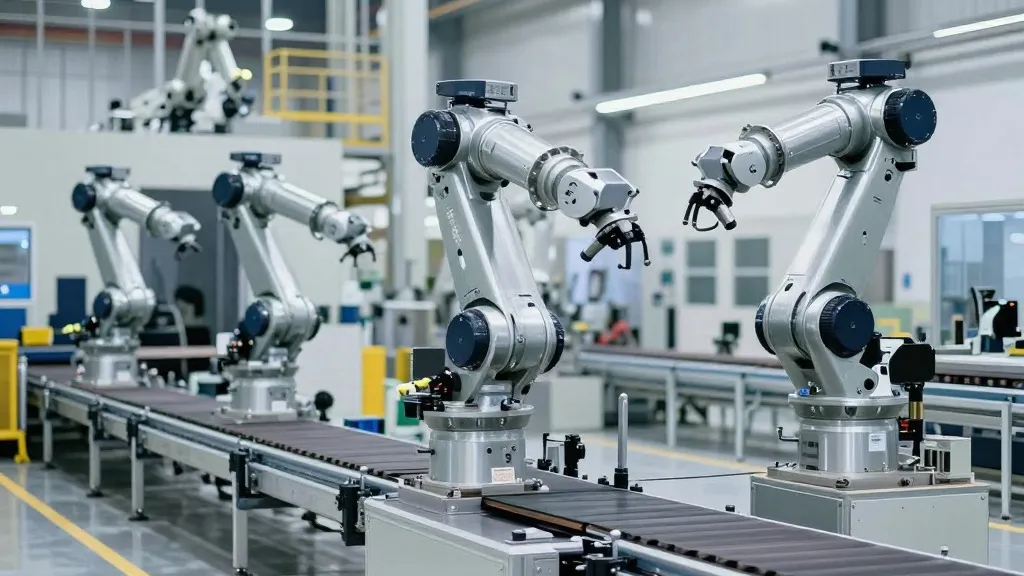
Ordinary people will soon have access to a new type of labor for their workplaces. Tesla has officially begun producing its Optimus robot on a high volume assembly line. The company states that these initial units meet the quality standards required for a real product. This marks a significant step from prototype to commercial item for the automaker.
The production line is located inside the Fremont factory in California. This space previously built the Model S and Model X vehicles. Tesla cleared out the old car production equipment in 46 days earlier this year. The move was made to create room for robot manufacturing. The current setup is designed to handle up to one million units per year.
Elon Musk spoke on the company's earnings call on Wednesday. He noted that most of the necessary equipment is already installed in Fremont. Output is expected to rise significantly as the line ramps up. The goal is to reach a production rate of roughly 20,000 robots per week.
Musk described the growth trajectory as a classic S curve. He explained that the initial phase involves a shallow slope in production numbers. The engineering team is currently refining the robot's artificial intelligence. They are also improving the electromechanical design and reliability. Musk expects this work to be finished by the end of next year.
Once complete, Tesla plans to start delivering Optimus to outside companies. These robots are intended for dangerous and repetitive jobs. The machines are also designed to work around the clock. This strategy allows the company to test the robots in real world scenarios.
A unique challenge exists for training the robots. Tesla's cars send driving data from a vast fleet of millions of vehicles. Optimus does not have such a large fleet to gather training data from. To solve this, the company created a program called the Optimus Academy. This involves 10,000 to 20,000 robots practicing a wide range of tasks.
The robots in the academy feed their learning into the next version of the model. Every unit coming off the Fremont line serves as a source of this data. This creates a feedback loop that improves the system over time. The approach is different from the training methods used for Tesla's vehicles.
Hardware upgrades are also planned for the robots. Tesla intends to put its AI5 chip into Optimus next year. Musk said a new video would show the robot completing tasks driven by AI. This will move beyond preprogrammed motions. He also criticized rival demos that rely on scripted routines.
The supply chain is preparing for mass production. In September, Tesla certified several partners for Optimus components. These include Tuopu, Joyson, and Sanhua. A larger factory for robots is also being built at Giga Texas. Drone footage shows the steel frame nearing completion at that site.
Musk has set a long term target for the Giga Texas plant. The goal is to produce 10 million robots per year. Tesla executives noted that production costs are trending toward those of the Cybercab. The hands of the robot remain the toughest design challenge. Much of the current engineering effort is focused on solving this issue.
Source: Teslarati · original report published
More Business · Rip-Off Report · Report a business · Got a Story?