Serbia's New Government Prioritizes Domestic Repairs Over Foreign Policy Shifts
Experts warn that internal institutional consolidation will take precedence over rapid changes in Serbia's relationships with neighbors, Russia, and the European Union.
By Jisoo Serrano ·
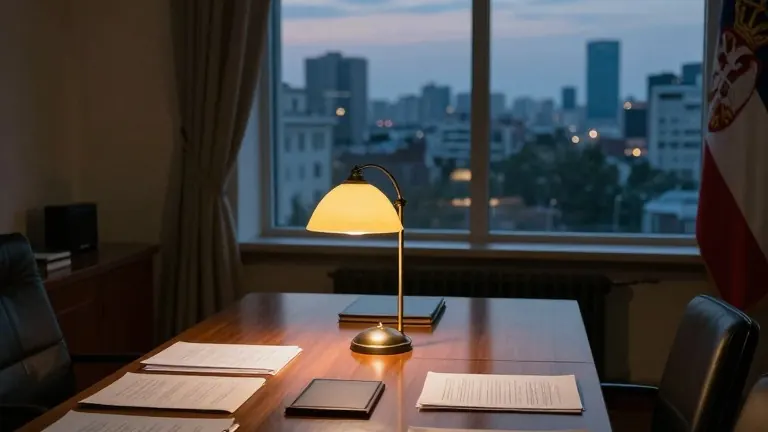
Serbia’s new student-led government has stated that it will focus on repairing fractured domestic institutions before altering the country’s long-standing foreign policy alignments. This approach follows the historic election victory of the Student List on Sunday, which ended the fourteen-year rule of Aleksandar Vucic and the Serbian Progressive Party.
Aleksandar Popov, director of the Centre for Regionalism in Novi Sad, told Al Jazeera that regional relations with Bosnia and Herzegovina, Croatia, Montenegro, and Kosovo will not be the immediate priority for the new administration. He explained that the incoming leaders must first address a system that has captured democratic institutions, including the judiciary, prosecution service, police, and media sector. Popov described this process as necessary tidying at home before solving problems with neighboring states.
Relations with Croatia remain particularly strained. Popov noted that while these ties are not frozen, they are marked by frequent sharp exchanges, such as Vucic’s recent accusation that Zagreb organized a color revolution. Despite public hostility between Belgrade and Zagreb, Popov argued that both governments have quietly converged on their positions regarding Bosnia and Herzegovina. He expressed hope that the new government, led by experts and civic leaders, would work to revive Serbia’s European Union integration by repairing these damaged neighborly ties.
Vuk Vuksanovic, a lecturer in foreign policy at King’s College London, predicted that foreign policy would transform the least under the new leadership. He stated that many international and domestic structures shaping Serbian foreign policy would remain in place. Vuksanovic noted that while Russian influence would face a blow with the end of uncritical media coverage in Vucic-controlled outlets, the new government is unlikely to adopt a hawkish stance toward Moscow overnight. He argued that Serbia still requires preferential gas prices from Russia and that the Kosovo dispute remains unresolved.
Vuksanovic added that the new government will not join EU sanctions or adopt a strong stance against Russia. Regarding Ukraine, he said Serbia will maintain its policy of not recognizing the annexation of Crimea and the Donbas. However, he placed a question mark over future ammunition deliveries, noting that the opposition viewed Vucic’s weapons sales to Kyiv as a cynical ploy to buy Western tolerance for his domestic rule.
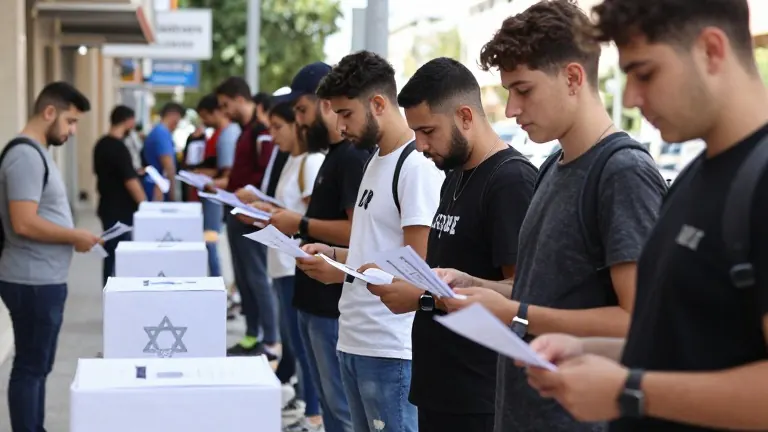
Bosko Jaksic, a foreign policy analyst, said that Serbia’s close relationship with Israel would not be severed, but recent controversial agreements would face scrutiny. He specifically pointed to contracts concerning Serbian ammunition exports to Israel and Israeli surveillance equipment exports to Serbia. Jaksic observed that Netanyahu’s government has lost another authoritarian, nationalist ally in Europe following Viktor Orban’s removal in Hungary. He added that Serbia’s future stance would depend on the outcome of Israel’s own elections.
Jaksic emphasized that Serbia’s foreign policy would undergo a review, with the policy of sitting on multiple chairs likely to be re-evaluated. He suggested it is realistic to expect Belgrade to strengthen its ties with the EU. All analysts agreed that the international community should expect a period of intense internal reform rather than sudden geopolitical realignments in the coming months.
Source: Al Jazeera