Pentagon Watchdog Cites Air Force in Denial of Starlink Probe
A bipartisan group of nine senators asked for an investigation into satellite speed cuts in Ukraine, but the inspector general referred the matter to the military branch.
By Rafael Esposito ·
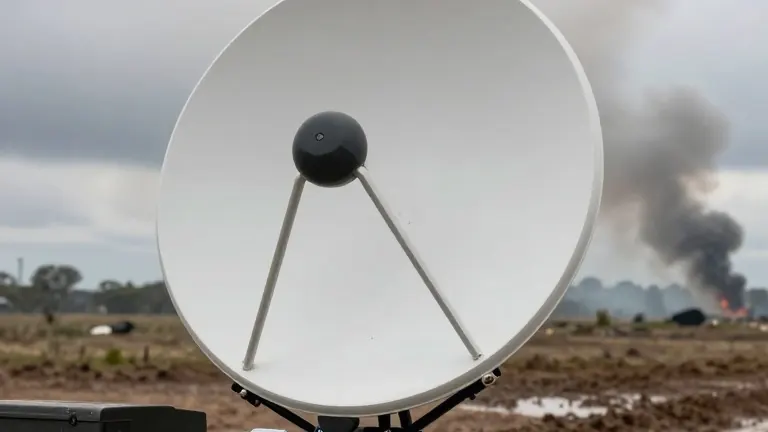
The Pentagon’s inspector general has declined a formal request to investigate why satellite internet speeds in Ukraine were slowed down this month. The watchdog office told a group of nine lawmakers that the Air Force is the appropriate agency to address their concerns. This decision has drawn sharp criticism from senators on both sides of the aisle who believe the military is avoiding a direct look at the role of SpaceX in national defense communications.
The dispute began after Ukrainian officials reported that their access to Starlink and its military variant, Starshield, was being throttled. They stated that the reduced speeds hindered their ability to track and intercept fast-moving Russian drones. A bipartisan letter from four Republicans and five Democrats asked the inspector general to determine if any U.S. government officials directed, approved, or knew about the changes before they occurred.
In a response letter dated Tuesday, the inspector general’s office said it carefully considered the request but determined the Department of the Air Force should handle the matter. Mollie Halpern, a spokeswoman for the office, added that the team might reconsider if new information emerges. The Pentagon passed its own inquiry to the inspector general, while the Air Force did not immediately reply to questions about the speed cuts.
Sen. Jeanne Shaheen, the ranking Democrat on the Senate Foreign Relations Committee, called the decision concerning. She noted that Ukraine relies on these systems to protect civilians. Shaheen pointed out that the Trump administration and SpaceX have offered conflicting explanations for the slowdowns. She argued that an independent review is necessary to assign responsibility and prevent similar issues in the future.
Elon Musk, who is an ally of President Donald Trump, acknowledged over the weekend that SpaceX throttled the Starlink service. He accused Ukraine of violating its terms of service, a claim Ukrainian officials rejected. Musk stated that the U.S. government controlled changes to the Starshield system. President Trump said he did not order the restrictions, while Vice President JD Vance suggested the White House coordinated with Musk.
A congressional aide familiar with the matter said the refusal to investigate is viewed as a reluctance to confront Musk’s influence. The aide noted that concerns over Musk’s control of the network have existed for years. Those worries contributed to the creation of Starshield, the version designed for military use. Lawmakers now seek answers on whether government officials were involved or if Musk exploited a system loophole.
This is not the first time Musk has intervened in Ukraine’s connectivity. In 2022, he ordered a Starlink blackout in the Kherson and Donetsk regions during the early days of the war. He cited fears of Russian escalation as the reason for that move. Following the recent slowdowns, Finnish company Iceye announced a partnership with Nokia and the Ukrainian defense ministry. They plan to explore building sovereign satellite communications to reduce reliance on existing systems.
The nine senators await a formal response from the Air Force regarding the specific technical and administrative reasons for the speed reductions. They want to know if any U.S. officials had advance knowledge of the changes to intelligence-sharing or warning capabilities. The outcome will inform future oversight efforts and potential legislation regarding military reliance on commercial satellite networks.
Source: HuffPost