NHTSA Proposes Cyan Lights as Mandatory Signal for Driverless Cars
Federal regulators are rewriting vehicle safety standards to standardize a blue-green indicator for automated driving systems while removing requirements for manual controls.
By Alina Ndlovu ·
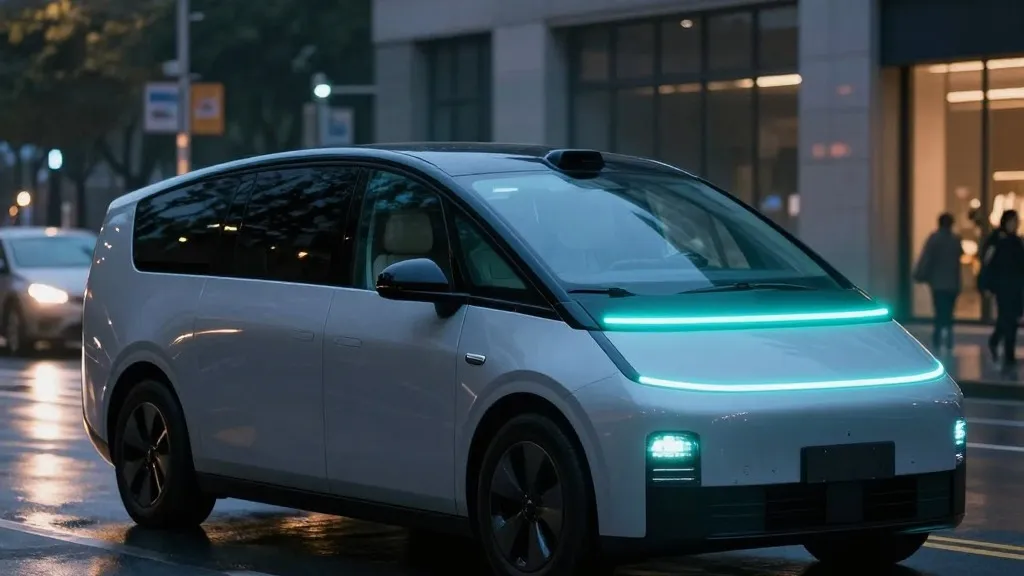
Federal regulators have officially proposed a national standard requiring driverless vehicles to display a distinctive cyan light when operating without a human at the wheel. The National Highway Traffic Safety Administration released these changes as part of an update to Federal Motor Vehicle Safety Standard No. 108. This move concludes a long debate within the industry over how autonomous cars should communicate their status to surrounding traffic. The agency selected a blue-green hue to create a clear visual distinction from existing automotive lighting conventions.
The proposal aims to give law enforcement and other road users a consistent signal that an automated driving system is in control. Currently, the auto industry relies on red, amber, and white lights for standard functions like braking and turn signals. Blue and red are reserved for emergency vehicles. NHTSA believes cyan fills the remaining visual gap without causing confusion among drivers. This standardization would allow major operators like Waymo, Nuro, and Zoox, as well as manufacturers such as GM and Mercedes, to adopt a uniform approach across the country.
While the cyan marker lamps would remain optional for manufacturers under the new rule, the agency intends to strictly regulate their technical specifications. NHTSA plans to define the exact color, brightness, and placement of these lights. This ensures that any automaker choosing to implement the feature uses a consistent and legally compliant setup. The goal is to prevent a fragmented market where different companies use varying colors or signals for the same function.
The regulatory package also includes significant simplifications for vehicle design. NHTSA proposes removing requirements for physical hazard switches, manual beam shifters, and turn levers, which are unnecessary for cars without human drivers. The agency is also updating the 12.8-volt testing standard to accommodate modern LED architectures. Additionally, regulators are considering eliminating rules that dictate the specific positioning of high-beam lights relative to low-beam lights.
This update is part of a broader Department of Transportation initiative to streamline the deployment of autonomous vehicles. The government seeks to make it easier for manufacturers to build cars without traditional human-centric controls, such as steering wheels and pedals. However, the path to full autonomy remains complex as regulators continue to enforce existing rules while drafting new ones.
Tensions between innovation and regulation are already visible in the current market. Last month, NHTSA opened an audit query into the Tesla Cybercab. The agency is examining the technical data and processes Tesla relied on when certifying the vehicle. The primary issue is the absence of sideview mirrors, pedals, and a steering wheel, all of which are currently mandated under existing FMVSS standards. This case highlights the ongoing friction as the industry pushes for streamlined designs while federal rules catch up to the technology.
Source: The Verge · original report published