iPod's 25-Year Legacy Faces Scrutiny
A quarter-century after its launch, the device that promised to revolutionize personal music storage is analyzed for its enduring impact and eventual obsolescence.
By Ishani Kapalli ·
Twenty-five years ago today, Apple CEO Steve Jobs stood before a skeptical tech industry to unveil a device that would fundamentally alter how consumers interact with digital media. The central tension of that 2001 presentation lay in the gap between existing portable music solutions and the promise of a seamless, pocket-sized library. While competitors like Sony, Creative, and Sonic Blue had already entered the market, Jobs argued that none had truly solved the user experience, setting the stage for a product that would dominate the pre-smartphone era.
The core proposition of the original iPod was deceptively simple yet commercially aggressive: it offered 5GB of storage for $399, a price point that positioned it as a premium accessory. This capacity was marketed as the equivalent of 1,000 songs, specifically defined as typical pop tracks encoded at 160Kbps. For the average consumer, this represented the ability to carry their entire music collection in their pocket, a claim that Jobs emphasized as the primary value proposition of the device.
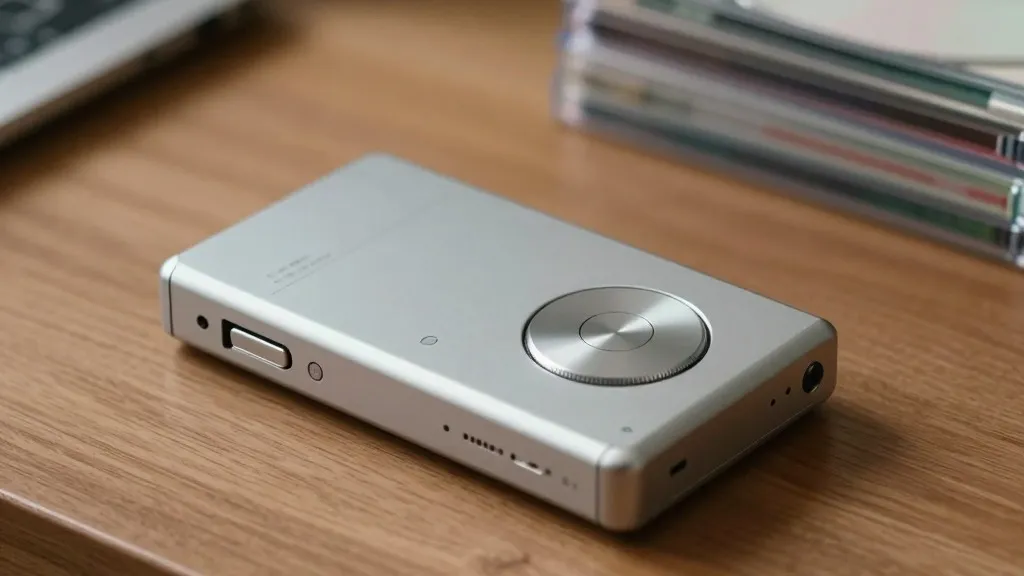
The hardware behind this promise relied heavily on a specific component from Toshiba. The iPod utilized an ultra-compact 1.8-inch hard drive, just 0.2 inches thick, which enabled the device to maintain dimensions comparable to a standard deck of cards. Measuring 2.4 by 4 by 0.78 inches and weighing only 6.5 ounces, the player was notably lighter than most contemporary cell phones. This form factor was central to its appeal, offering a portable solution that did not sacrifice storage capacity for size.
Connectivity and speed were critical differentiators in a market where data transfer times were a major pain point. The original iPod featured FireWire 400 connectivity, which Apple touted as the first and only music player to utilize this interface. According to Jobs’ presentation, transferring an entire CD of MP3s took between five and 10 seconds via FireWire, a stark contrast to the approximately five minutes required for USB transfers of the same data. Filling the device with 1,000 songs was estimated to take just 10 minutes, compared to five hours for a USB-based competitor.
User experience was another focal point of the design philosophy. The device featured a rechargeable lithium-polymer battery providing 10 hours of continuous playback, with the ability to recharge to 80% in one hour. The interface included a specialized scroll wheel with piezoelectric tactile feedback, designed for single-hand operation. This allowed for rapid navigation through playlists, artists, or specific tracks, a capability demonstrated on stage with Sarah MacLachlan’s 'Building a Mystery.'
The software ecosystem was launched simultaneously with the hardware, introducing iTunes 2. This version added key features such as MP3 CD burning and, crucially, an Auto-Sync function. This feature ensured that any music library curated on a Mac would remain synchronized with the portable player whenever the device was connected for charging or data transfer. The iPod also functioned as a FireWire hard disk drive, adding a layer of utility beyond music playback.
Contextualizing the launch, Apple had recently navigated the aftermath of the dot-com bubble burst, having reestablished its fortunes through the Mac OS X era and the iMac and iBook lines. Jobs envisioned the Mac as the hub of a digital lifestyle, connecting various devices including cameras and DVD players. The iPod was the final piece of this strategy, targeting a massive market with no clear leader. Although the product line continued for nearly two decades, with the final 7th-generation iPod Touch released in May 2019, the official discontinuation did not occur until May 2022.
The legacy of the original iPod is now viewed through the lens of its short-lived dominance. While it coexisted with the iPhone for over a decade following the latter's 2007 debut, the smartphone ultimately rendered dedicated music players obsolete. The 25th anniversary of the launch invites a reevaluation of how a single device could define an era of portable media, relying on a combination of aggressive marketing, specific hardware partnerships, and a seamless software integration that competitors had struggled to replicate.
Source: Tom's Hardware