NASA's Moon Plan May Require 22 Starship Launches
A new internal estimate suggests the Artemis program needs significantly more fuel deliveries than previously acknowledged, raising doubts about the timeline for returning humans to the lunar surface.
By Jisoo Serrano ·
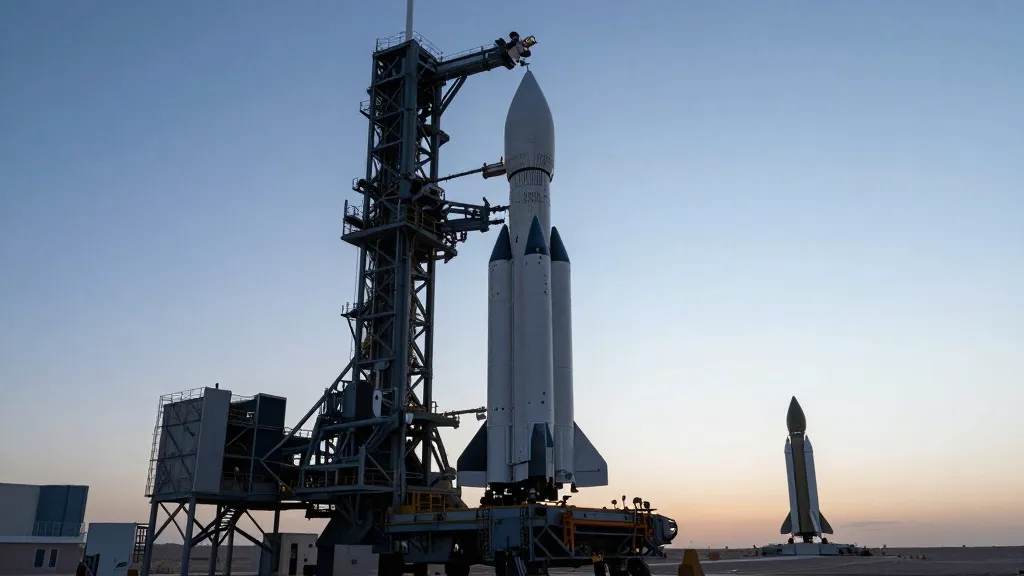
Twenty-two. That is the startling figure that has surfaced as the latest estimate for the number of Starship launches required to fuel a lunar lander for a crewed mission to the Moon. This specific number has been the subject of intense scrutiny and quiet debate within the space community for years, yet it is only now that a precise, albeit unofficial, count has been openly discussed in the context of the Artemis program's feasibility. The emergence of this high number challenges the optimistic projections that have guided planning efforts over the last several years.
NASA has historically treated this metric with a level of caution rarely seen in modern space agencies. While the agency has no interest in nuclear arsenals, it has guarded the required launch count for lunar operations with similar secrecy. The official stance has long been one of deliberate ambiguity, with officials frequently stating that they do not have a definitive answer and therefore prefer not to commit to a specific figure. This reluctance has persisted despite the critical importance of the number to the overall budget and schedule of the program.
In 2023, Lisa Watson-Morgan, who served as the director of NASA’s Human Landing System, articulated this hesitation in an interview. She noted that while the agency had a general understanding of the requirements, she was reluctant to state the exact figure. Subsequent comments from her and other officials have placed the estimate in the "high single digits to the low double digits" range. This phrasing typically implies a requirement of roughly a dozen launches, a substantial number that would involve one "depot" Starship in low-Earth orbit being filled by eleven separate "tanker" vehicles carrying liquid oxygen and methane propellant.
Other voices within the administration have previously cited even higher numbers, with some officials referencing the "high teens" as a potential requirement. The underlying hope of the program has always been that SpaceX would achieve dramatic improvements in the lift capacity of the Starship vehicle. Such advancements would theoretically reduce the number of tanker flights needed to achieve the necessary propellant mass for a round trip to the lunar surface and back to orbit.
However, a growing concern among some NASA officials suggests that these capacity improvements may not arrive in time. There is apprehension that the necessary technical leaps might be delayed, potentially compromising Starship's ability to play a significant role in returning humans to the Moon within this decade. The window of opportunity for the Artemis goals is narrowing, and the logistics of fueling remain a persistent bottleneck.
The latest clarity came on Thursday during the quarterly meeting of the NASA Aerospace Safety Advisory Panel. The panel is tasked with reviewing the risks associated with NASA’s major programs, including the complex logistics of lunar landings. The discussion brought the internal estimates to the forefront, highlighting the tension between the agency's public timelines and the engineering realities on the ground.
Charlie Precourt, a panel member and former NASA astronaut, spoke specifically about the risks inherent in the Artemis program. His address focused on the challenges of landing humans on the Moon, a task that is dependent on the successful execution of the fueling strategy in low-Earth orbit. The fact that a former astronaut is weighing in on the logistical hurdles underscores the practical implications of the launch count for mission safety.
The shift from vague ranges to a specific estimate of 22 launches raises significant questions about the program's trajectory. If the number holds true, the logistical burden on SpaceX and NASA increases considerably. This development forces a re-evaluation of the assumptions that have underpinned the Artemis schedule since its inception, suggesting that the path to the lunar surface may be longer and more resource-intensive than previously hoped.
As the debate continues, the focus remains on whether Starship can evolve quickly enough to meet these demands. The next few months will likely see further discussions on this topic, with both the agency and the contractor under pressure to clarify their positions. For now, the number 22 stands as a stark reminder of the engineering challenges that still stand between Earth and a permanent human presence on the Moon.
Source: Ars Technica · original report published