CapMetro Doubles Bus Service Hours With New Overhead Chargers
Two new terminals allow 48 electric buses to charge during operations, extending daily service to 22 hours.
By Alina Ndlovu ·
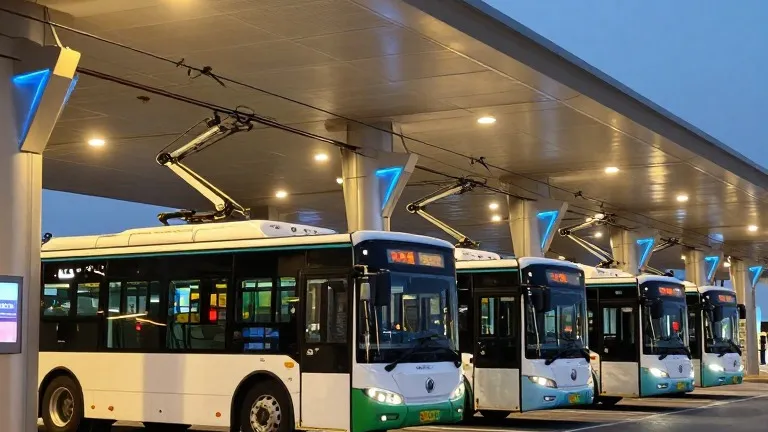
Austin residents now have access to a transit system that operates for nearly twice as long as before. CapMetro, the city's public transit agency, opened two new park-and-ride facilities this month to support its expanding electric bus fleet. The terminals, located at Goodnight Ranch and Expo Center, began serving passengers in October after being announced in June.
The primary function of these new sites is to solve the range limitations of battery-electric vehicles. Each terminal is equipped with overhead pantograph charging equipment. This technology allows buses to connect to a power grid at the end of their route. The buses top up their batteries while passengers transfer or wait, ensuring they have enough power for the return trip.
The charging infrastructure extends from CapMetro's main bus depot to these two new stops. At the depot, infrastructure partner Camber Charging installed two 1,440 kW systems. These systems connect to 48 industrial dispensers, creating a total charging capacity of 2.9 megawatts. This setup allows the agency to charge up to 48 buses simultaneously during the night.
Andy Skabowski, Chief Operations Officer and Executive VP at CapMetro, explained that the on-route charging strategy changes how the fleet operates. He stated that a typical bus holds eight hours of charge. With the new pantograph system, that window extends to 20 or 22 hours. Skabowski noted that this frequency enables the agency to promise service intervals of every 10 to 15 minutes on the affected routes.
The buses themselves are built on the Xcelsior platform by New Flyer, a Canadian manufacturer. The vehicles produce up to 320 all-electric horsepower. The engines provide full torque at 0 rpm, a feature designed to handle stop-and-go traffic conditions common in Austin. New Flyer indicates the platform can offer up to 660 kWh of available battery capacity, though specific specifications were not detailed in the agency's release.
The new terminals serve the Rapid 800 and Rapid 837 electric bus lines. These facilities provide passengers with improved amenities at the end of the lines. Camber Charging manages the preventive maintenance and energy software for all three locations. The company also provides remote diagnostics to monitor the health of the charging equipment across the network.
The two terminals are now fully operational alongside the agency's existing depot infrastructure. This expansion allows CapMetro to keep more electric buses on the road for longer periods each day. The project supports the agency's goal of increasing the size of its electric fleet while maintaining reliable service times for commuters.
Source: Electrek
More Business · Tech news · Rip-Off Report · Report a business · Got a Story?