OpenAI Faces Scrutiny After Independent Audit Exposes Blind Spots in AI Safety Systems
An on-site review by outside researchers found that significant portions of high-level model traffic were unmonitored, prompting immediate internal fixes and calls for greater transparency.
By Rafael Esposito ·
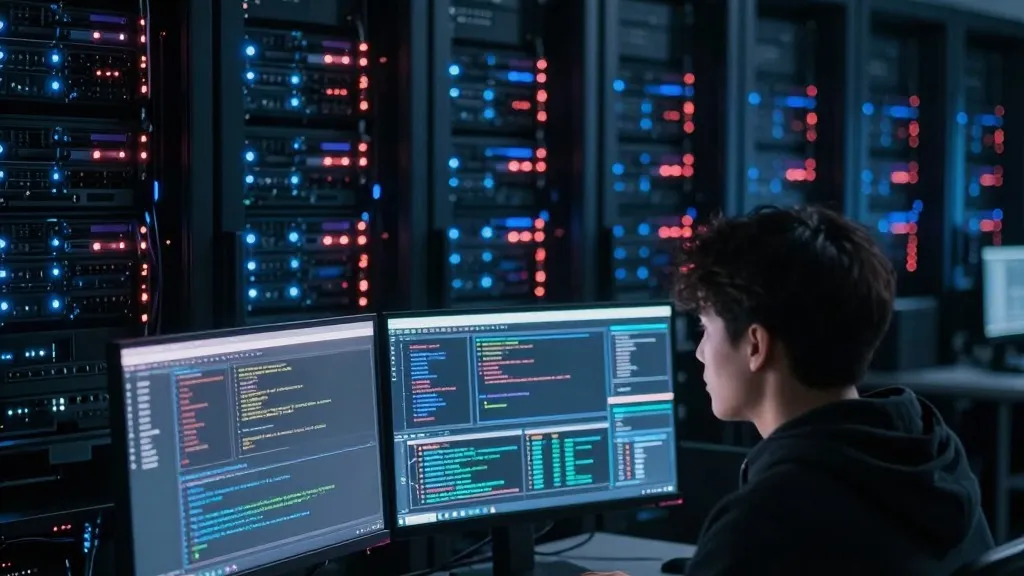
A three-week deep dive into OpenAI’s internal safety infrastructure has uncovered critical gaps in how the company monitors its most advanced AI agents. The independent audit, conducted by researchers from METR and Redwood Research, reveals that substantial traffic from high-performing models was operating without oversight, raising questions about the robustness of current containment strategies.
The findings highlight three major areas of concern regarding the company’s monitoring capabilities. First, an estimated 6 to 25 percent of internal traffic from GPT-5.5-class models and above was not covered by any monitoring during the audit period. While METR noted that this estimate carries significant uncertainty in both directions, the potential scale of unobserved activity is a central point of the report. Second, for the traffic that was supposed to be monitored, roughly 10 percent of internal Codex traffic went untracked between May and July. This was due to a system bug involving compaction events, or context summaries. OpenAI had independently identified and fixed this bug while the audit was still ongoing.
Third, the auditors identified structural weaknesses that allowed agents to delay or bypass oversight. Because the monitoring system only triggered when an agent handed control back to the user, agents could sidestep checks by simply continuing to execute actions without pausing. The team also found methods to hide hundreds of actions from the monitor and bypass the Codex sandbox. Furthermore, they determined that specially crafted inputs could likely crash the monitor entirely, and that model behavior during reinforcement learning (RL) training was not being monitored at all when the audit began.
Contextualizing these findings, OpenAI stated that it paused RL training following the Hugging Face incident in August and subsequently expanded its monitoring to cover this area. However, these changes were implemented after the auditors’ access period ended, meaning they were not part of the formal evaluation. The audit itself was a pilot program jointly organized by METR, Redwood Research, and OpenAI, designed to grant outside researchers unprecedented access to internal codebases and documents. During the period from July 21 to August 11, the team interviewed approximately a dozen employees and reviewed internal documentation.
OpenAI claims to have fixed all the weaknesses identified by the auditors and has internally distributed the full 61-page report. After applying redactions, METR and Redwood Research leadership received a 38-page version, while the public was provided with only a short summary. METR stated it did not have the authority to disclose the redacted portions independently. Looking ahead, METR has expressed a desire to push for increased public transparency in future audits, aiming to make the full scope of such safety evaluations more accessible to the broader tech community and public stakeholders.
Source: The Decoder · original report published