Kyiv Military Administration Reports 140 Deaths as Shelters Fill
Strikes on energy infrastructure and residential areas have pushed the capital's 2026 casualty count past the previous year's total.
By Rafael Esposito ·
Kyiv, a city of four million, has shifted from a rear guard to a frontline zone as Russian strikes widen. The military administration for the capital announced that 140 residents died in the first eight months of 2026. This figure exceeds the 172 total fatalities recorded for the entirety of 2025. If the current pace continues, 2026 will mark the deadliest year for the city since the full-scale invasion began in 2022.
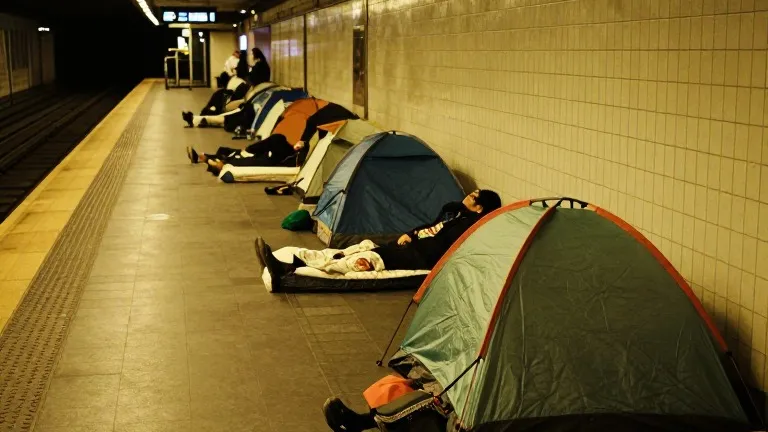
The scarcity of official shelters has forced many residents to use subway stations as primary dwellings. Approximately ten people arrive at each station every night to set up mattresses and small tents. Children sleep next to adults, while pets rest along the cold walls. Halyna, a resident of the Lukyanivka district, takes her five-year-old son Roman to the nearest station most evenings. She told Deutsche Welle, "We're alive.. We've been lucky once again." Her district has been a repeated target during the four years and eight months of conflict.
The strikes have impacted residential buildings and schools. In September, a drone struck an apartment in the central Pechersk district, killing 14-year-old Daniel Umanskyj while he did homework. Vlad, a neighbor who was in the hallway with his daughter, said, "We were late that day, and this saved our lives." He added, "These sick monsters don't care who they kill." Flowers now mark the damaged building. In early October, a drone hit a school in southwestern Kyiv. Principal Valentyna Chorna said the school continued in-person classes for grades one through nine because its shelter holds more than 500 students.
Daily routines depend heavily on alert levels. If a siren sounds in the morning, children may miss school. Parents face the strain of working while children stay home alone. One colleague at the Deutsche Welle Kyiv bureau noted that the walk to school remains risky because alerts can start at any moment. Her own building was hit by a drone in September, though her apartment suffered no damage and her daughter was at school.
Infrastructure damage has disrupted supply chains. Strikes on warehouses have created supermarket shortages not seen since the early months of the war. Emergency power outages returned at the end of September. A Russian attack also paralyzed the subway system. With energy infrastructure under fire, the city faces uncertainty regarding reliable heat, electricity, and water for the winter season.
Authorities are adjusting rules to maintain normalcy. The curfew now runs from 1 a.m. to 5 a.m. Some facilities may operate during yellow alerts. During red alerts, which signal ballistic or cruise missiles or large combined attacks, residents must take shelter immediately. A survey by the Kyiv International Institute of Sociology reported in early October that 72% of residents said in September they were prepared to endure the war as long as necessary.
Source: Deutsche Welle