High Altitude Shocks: Northern Tibet Faces Major Quake Aftermath
At least sixteen people died and hundreds of structures collapsed in the Tibetan region of Nagqu following a powerful magnitude seven seismic event late Thursday night.
By Rafael Esposito ·
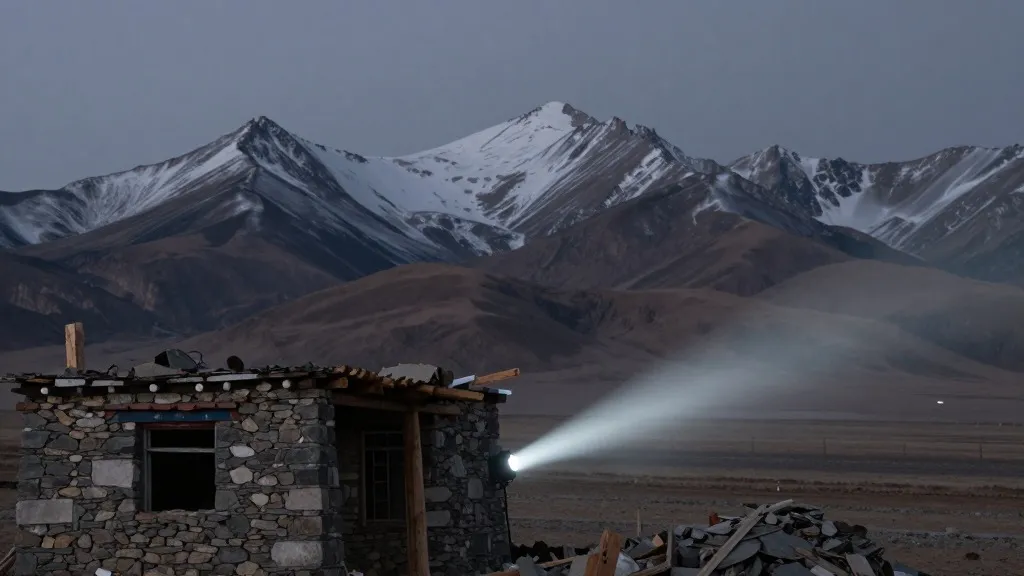
A powerful magnitude seven earthquake struck the northern Tibetan region of China late on Thursday evening, leaving at least sixteen people dead and 46 others injured. The seismic event caused significant structural failures, with the most severe destruction reported in and around the city of Nagqu. Local officials confirmed that hundreds of residential buildings and outbuildings have collapsed under the force of the tremors.
The scale of the physical damage in the Nagqu area is substantial. According to the local media office, which cited data from city government sources, at least 339 homes have fallen. In addition to the residential losses, twenty livestock sheds were destroyed. Of the 46 people reported injured, eleven are in serious condition, while the other thirty-five sustained minor wounds. Rescue teams remained active in the area as of the latest reports, continuing their search for survivors and assessing further damage.
A massive logistical effort is underway to support the affected population. More than 1,600 personnel from the local county have been mobilized to join the rescue and recovery operations. Relief materials have begun arriving at the site to aid those displaced by the disaster. These supplies include 1,000 prefabricated housing units, approximately 3,000 tents and folding beds, flashlights, and winter clothing to help residents cope with the cold.
Infrastructure in the region has faced immediate challenges. China's state news agency, Xinhua, reported that communication networks were down in parts of the zone on Friday. To ensure safety, local railway authorities implemented emergency protocols to halt train traffic through the affected corridor. This pause in rail operations aims to prevent further incidents while engineers inspect the tracks and surrounding terrain for hidden damage.
Road access has also been restricted due to natural hazards triggered by the quake. Rockfalls along National Highway 317 forced officials to close a section of the route. Currently, only emergency, rescue, and official support vehicles are permitted to pass through the restricted zone. Crews are working to clear the debris and make the highway safe for general traffic again, a process that depends on the stability of the surrounding mountainside.
Weather conditions may add difficulty to the ongoing operations. Forecasters indicated that intermittent snow is expected to fall across the earthquake zone over the next three days. This precipitation could slow down rescue efforts and make conditions more hazardous for both workers and survivors in temporary shelters.
This event marks the strongest tremor in the region in half a decade, according to CCTV, China's national broadcaster. The United States Geological Survey provided specific data on the quake's mechanics. The seismic activity occurred at 10:33 p.m. local time, with a focal depth of 18 kilometers. The epicenter was located 191 kilometers to the east-northeast of Nagqu. This area is characterized by high altitude and sparse population density. Nagqu itself is situated more than 300 kilometers north of Lhasa, the capital of the Tibetan region.
Source: CBC News