Lebanese Shi'ites Favor State Control of Weapons, September Survey Shows
A poll of 800 residents found that two-thirds support transferring Hezbollah's arsenal to the national army, a shift from earlier data.
By Rafael Esposito ·
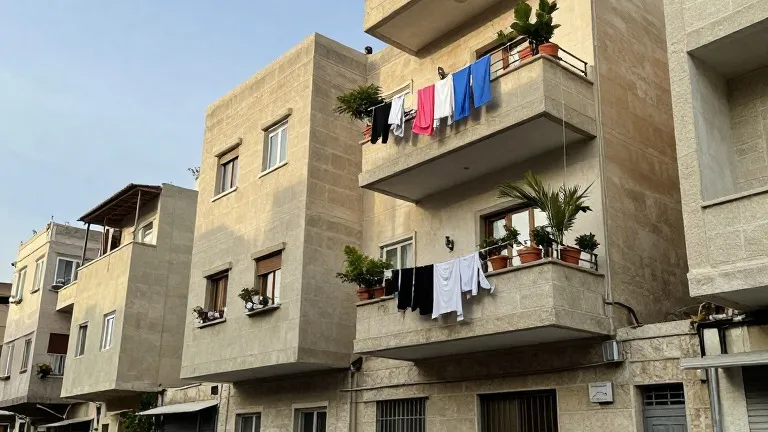
A September survey indicates a majority of Lebanese Shi'ites now support handing Hezbollah's weapons to the state.
The poll was conducted by Statistics Lebanon in September among 800 Lebanese Shi'ites. Results showed that 66.4% favored transferring the group's weapons to the Lebanese government. In contrast, 29.6% preferred that Hezbollah retain its arsenal. The data contrasts with a May 2026 survey by Information International, cited by researchers at Israel's Institute for National Security Studies, which found 87.5% of respondents opposed disarming the group.
Hezbollah has maintained that its military capability is essential for defending Lebanon against Israel. The new findings suggest a change in sentiment within the community that has historically served as the group's primary base of support. Orna Mizrahi and Moran Levanoni noted in a June analysis that the group's influence relies on social networks and political power, as well as the historical marginalization of Shi'ites.
Respondents also expressed strong confidence in the national military. Approximately 78.5% said they trusted the Lebanese Armed Forces. Fifty-one percent of participants identified the army as the institution best positioned to ensure long-term security. Only 16.5% selected Hezbollah for that role. Furthermore, 71.1% believed that decisions regarding war and peace should rest exclusively with the state, while just 5.9% supported a larger role for Hezbollah leadership in shaping the country's future.
Opinions on the group's performance in recent conflicts were divided. Some 67.4% stated that Hezbollah failed to meet its goals in the war with Israel or achieved only partial success. Forty-two percent reported disappointment, anger, or concern regarding the leadership and the conflict's outcomes. Despite this, 59.5% still expressed trust in the organization, with 37.1% reporting a high level of confidence.
Hezbollah has announced financial aid for families affected by the war that began in March 2026. The group pledged up to $14,000 for eligible families in Beirut and its southern suburbs who lost their primary homes. Families in other regions can receive up to $12,000. In the southern city of Tyre, property owners reportedly resisted the opening of a branch of Al-Qard Al-Hassan, a financial institution linked to Hezbollah. Residents feared the building might become a target for Israeli strikes, a risk that has materialized in previous conflicts.
The group has suffered major losses in its military and leadership ranks. These include the death of Hassan Nasrallah in September 2024. The recent war caused heavy destruction in villages across southern Lebanon. Whether this discontent translates into political change may depend on the state's ability to provide security, reconstruction, and economic opportunities.
Source: The Jerusalem Post