Beijing's Power Structure: A General Joins the Inner Circle
China's Communist Party has promoted Vice Chairman Zhang Shengmin to the Politburo while adopting new measures to tighten internal discipline ahead of President Xi Jinping's expected fourth term.
By Rafael Esposito ·
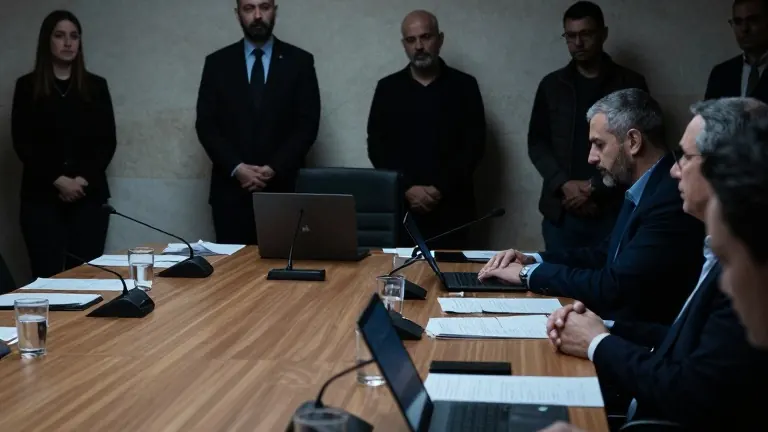
An attendance rate of 74 percent marked the recent four-day closed-door meeting of China's top Communist Party leaders, a figure that signals a level of internal consolidation not seen since the Mao Zedong era. Neil Thomas, a senior fellow at Asia Policy who studies Chinese politics, calculated this figure from the plenum records, noting it reflects wider-than-expected purges of top officials.
During the session held this week, party leaders elevated Gen. Zhang Shengmin to the Politburo, the governing body that directs the country's highest policy decisions. Zhang serves as vice chairman of the Central Military Commission. His promotion restores a military representative to the inner circle after President Xi Jinping purged two other top generals in previous years. Those earlier removals left Zhang as the sole member of the military commission besides Xi himself, creating a gap in military representation at the highest level of the party.
Zhang also holds a specific role overseeing internal discipline for the armed forces as deputy secretary of the CMC Commission for Discipline Inspection. His dual position places him at the intersection of military command and party oversight. The party confirmed these personnel changes during the plenum, reviewing the earlier removals of top members and military officials.
Alongside the personnel shifts, the leaders adopted a resolution focused on strengthening self-governance, discipline, and anti-corruption efforts within the party. The document, summarized by the official Xinhua News Agency, states that the tasks facing the party are "increasingly arduous." It specifically cites the need to unite and lead the people in safeguarding national sovereignty, security, and development interests.
The resolution emphasizes maintaining ideological purity and close ties with the public. It calls for enhancing the party's long-term governance capacity while preserving its progressive nature. Party leaders have maintained an anti-corruption crackdown since Xi came to power in 2012, but analysts indicate the current focus has expanded to include underperforming officials alongside those accused of corruption.
This meeting occurs approximately one year before President Xi Jinping is widely expected to secure his fourth five-year term as party leader. The resolutions adopted during this closed-door session will guide the party's direction in the coming years. The low attendance rate and the specific promotion of Zhang highlight the current state of the leadership structure as it prepares for the next phase of governance.
Source: WUSF Public Media