Antarctic Ocean Layer Reverses Decades of Freshening in Just a Few Years
Researchers link the rapid salinity spike to the collapse of sea ice after 2016, warning that the shift could alter global heat distribution within five years.
By Rafael Esposito ·
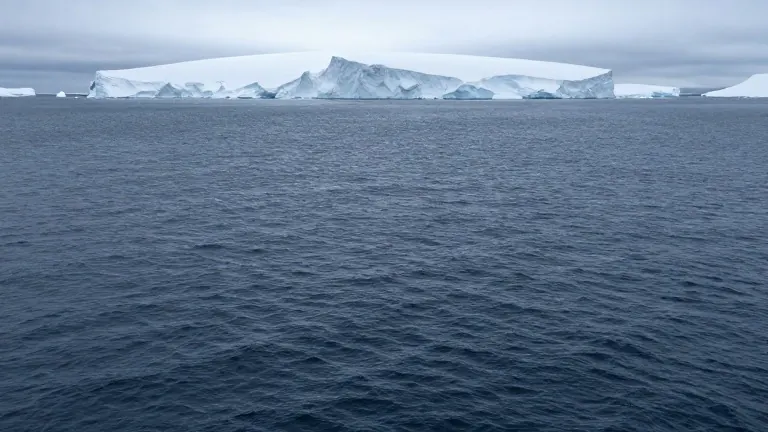
A massive layer of the Southern Ocean has flipped from a long-term trend of freshening to a sharp increase in salinity, a change scientists say mirrors shifts usually seen over millennia but now occurred in just a few years. The transformation affects a band of water between 2,300 and 4,000 feet deep that encircles Antarctica.
The shift traces back to the sudden decline of Antarctic sea ice. Ice extent hit a record high in 2014, then dropped to a record low in 2016. It remained well below those 2014 levels, reaching another low point in 2023. That year, ice coverage was approximately one million square miles below the 1981 to 2010 average, an area roughly four times the size of Texas. As the ice volume dwindled, less freshwater entered the ocean during the melt season, causing the water to become saltier.
Bishakhdatta Gayen, a professor at the University of Melbourne and the Centre for Atmospheric and Oceanic Sciences in Bengaluru, India, co-authored a paper published Wednesday documenting these changes. The study combined six independent datasets to track the Southern Ocean from 2004 to 2024. The data came from Argo floats, which drift through the water, descend to various depths to measure density and salinity, and then resurface to transmit readings. Gayen noted that a separate 2025 study also detected increasing surface salinity linked to the declining ice.
The affected layer, known as Antarctic Intermediate Water, spreads northward into the Indian, Pacific, and Atlantic oceans. It transports heat, carbon, oxygen, and nutrients toward the tropics and across the equator. Gayen stated that changes to the density, thickness, and salinity of this layer influence how heat moves between the ocean surface and deeper waters. He said these changes could affect how the ocean stores and redistributes heat.
Gayen warned that the impacts are potentially knocking on the door within five years. He added that more monitoring is needed to track the changes as the ocean continues to shift.
Source: Ars Technica