70,000 Deaths: The Cost of Netanyahu's 19-Year Tenure
With polls showing a razor-thin margin in the 120-seat Knesset, voters weigh a decade of war against a challenger with no prior political record.
By Jisoo Serrano ·

More than 70,000 Palestinians have died in the Gaza war that followed the October 7, 2023 attacks, a toll that has become the central metric for Israelis voting on Tuesday. Benjamin Netanyahu, who has served as prime minister for 19 of the last 30 years, faces a Knesset election that polls indicate will be decided by a single seat out of 120. The contest is less about traditional left-right ideology and more about whether the electorate wants a change in leadership after nearly two decades of his rule.
Netanyahu first entered the premiership in 1996. Since then, he has maintained power through various coalition arrangements, most recently relying on a loyal base that has persisted despite internal challenges. His current opponents include Gadi Eisenkot, a former Israel Defense Forces chief of staff who entered politics only four years ago. Eisenkot’s party, Yashar, which translates to straight or direct, has positioned itself as a pragmatic alternative to what supporters describe as excessive rhetoric.
The opposition bloc is a coalition of former allies who have since fractured. Naftali Bennett and Avigdor Lieberman, both from the nationalist right, now lead the charge against the incumbent. On the far right, Yishai Fleisher of Otzma Yehudit argues that Netanyahu has drifted too far left. Fleisher called for expanded settlements in the West Bank and Gaza, a ministry to facilitate the voluntary departure of Palestinians, and the implementation of the death penalty.
Netanyahu’s campaign has framed the choice as a binary between Yamin, or the right, and Falastin, or Palestine. His posters place opposition leaders alongside representatives of the two parties for Palestinian citizens of Israel, who comprise roughly a fifth of the population. This strategy aims to test whether anti-Netanyahu Jewish parties will rely on Arab parties to form a government, a scenario pro-Netanyahu media have emphasized in recent weeks.
Tensions flared this week when Yinon Magal of Channel 14, a pro-Netanyahu outlet, called Eisenkot a Moroccan monkey. The slur was raised by speakers at a rally in Modi'in, a city between Tel Aviv and Jerusalem, though Eisenkot did not repeat it. Attendees viewed his silence as a sign of restraint, while critics questioned his ability to counter the incumbent’s aggressive style.
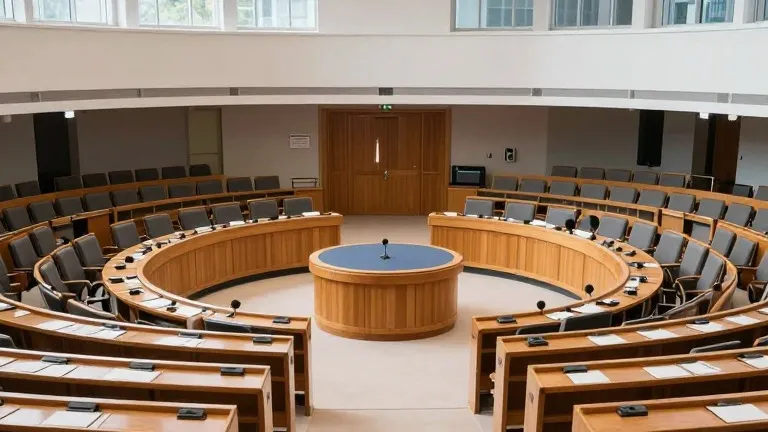
The vote follows a series of setbacks for the government, including the failed eradication of Hamas and the survival of Iran’s nuclear program. Netanyahu also faces an ongoing corruption trial and the fallout from his attempt to curb the supreme court. Despite these issues, his allies maintain that he remains a skilled coalition builder who can outmaneuver rivals in post-election negotiations. The election results will determine whether the 120-seat Knesset grants him a fourth term or forces a new government.
On Thursday, a state ceremony marked the 31st anniversary of Yitzhak Rabin’s assassination. Netanyahu sent a low-ranking minister in his place. In the Negev desert, young Israelis at a music festival were filmed singing Rabin’s anthem, a sign that the legacy of the former prime minister still resonates. The outcome of Tuesday’s vote will hinge on whether this sentiment translates into enough seats to break the incumbent’s hold on power.
Source: The Guardian
More Politics · World news · Report a business · Got a Story?